Structure your first day in the Marrakech medina as a slow south-to-north loop: visit Bahia Palace and the Kasbah quarter in the quiet morning (09:00–11:30), cross through artisan souks to Ben Youssef Madrasa before lunch, rest on a shaded rooftop, and reach Jemaa el-Fna near dusk. A 100% private 6-hour Medina City Tour costs €35/pp (monument tickets paid on site), with hotel pickup, no deposit, and free cancellation up to the exact day.
Stepping inside Marrakech’s twelfth-century rose-clay ramparts for the first time feels like walking onto a living stage: cedarwood smoke, freshly pressed orange juice, the rhythmic tap of brass hammers, and sudden silence whenever a heavy carved door closes behind you into a riad courtyard.
Why your first day sets the tone for the whole trip
Travellers who fall deeply in love with Marrakech almost always share one habit: they resist the urge to pin twelve attractions across the map on day one. The medina is a dense medieval web designed for pedestrians and handcarts, not straight-line sightseeing. Trying to race between distant gates in midday heat turns magical alleys into an obstacle course.
Instead, treat your first day as a gentle south-to-north arc anchored by three architectural masterpieces, broken up by long mint-tea pauses on elevated terraces. Seeing the medina with a licensed local guide on morning one (€35/pp for our private 6-hour Medina City Tour) acts like switching on subtitles: suddenly you recognise neighbourhood communal bread ovens, historic caravanserais (fondouks), and quiet artisan lanes you would have walked straight past alone.
The three essential architectural anchors
Start at 09:00 at Bahia Palace in the southern mellah-adjacent quarter before tour coaches arrive. Built in the late nineteenth century for Grand Vizier Si Moussa and expanded by his son Ba Ahmed, the palace unfolds across 150 rooms linked by orange-blossom courtyards, painted cedar ceilings, and luminous zellige tilework. Notice how every room shifts from shaded coolness to bright marble glare—a masterclass in traditional Moroccan climate design.
From Bahia, stroll past the spice stalls of Rahba Kedima and through the northern craft alleys toward Ben Youssef Madrasa. Founded in the fourteenth century and magnificently rebuilt under the Saadians in 1565, this former Islamic college once housed up to 900 students in tiny upstairs dormitory cells overlooking a tranquil reflection pool. The carved stucco inscriptions, Kufic calligraphy, and dark Atlas cedar screens represent the finest preserved architecture in Marrakech.
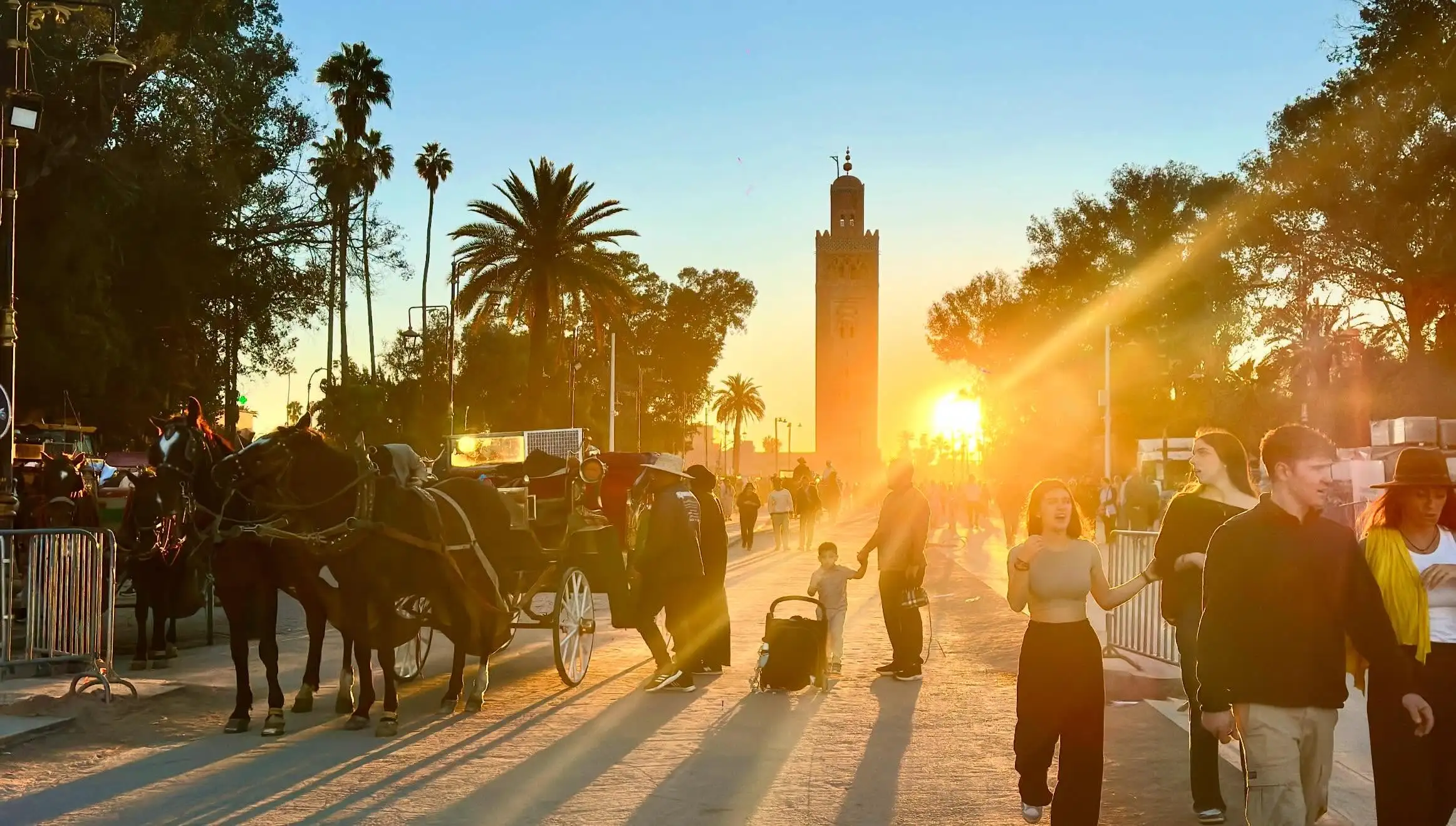
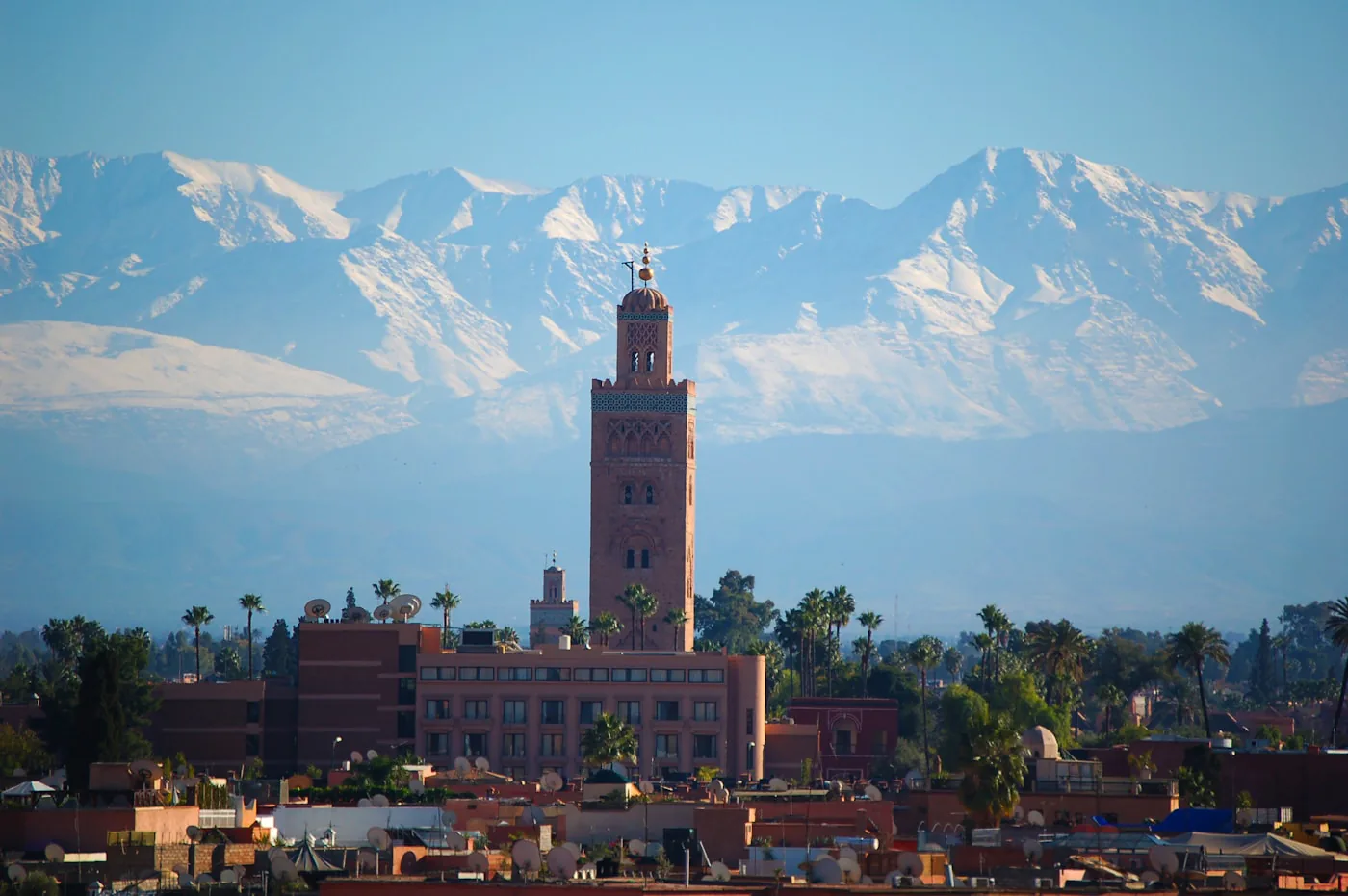
Finally, anchor your orientation around the towering 77-metre minaret of the Koutoubia Mosque (non-Muslims admire the twelfth-century stonework and gardens from outside) and nearby Jemaa el-Fna. Visit the grand square briefly by day to watch its scale, then return right around sunset as smoke curls upwards from dozens of numbered evening food stalls and Gnawa drummers gather in open circles.
| Landmark | Approx. entry (paid on site) | Typical hours | Best time to visit |
|---|---|---|---|
| Bahia Palace | ~100 MAD (~€9.50) | 09:00 – 17:00 | 09:00 sharp before midday groups |
| Ben Youssef Madrasa | ~50–70 MAD (~€5–€6.50) | 09:00 – 18:00 | 09:30 or late afternoon after 16:00 |
| Saadian Tombs | ~100 MAD (~€9.50) | 09:00 – 17:00 | Opening hour to avoid the Chamber of 12 Pillars queue |
| El Badi Palace | ~100 MAD (~€9.50) | 09:00 – 17:00 | Late afternoon for warm light and nesting storks |
| Koutoubia Gardens & Minaret | Free (exterior only) | Always open | Golden hour before walking into Jemaa el-Fna |
Managing noise, scooters, and street offers with calm
Two small street habits transform how confident you feel in the medina within ten minutes. First, always walk steadily on the right-hand side of narrow lanes. When you hear “Balak! Balak!” (watch out), step smoothly against the wall without freezing in the middle of the path—a delivery donkey, wooden cart, or moped will glide straight past.
Second, learn the polite Moroccan brush-off: a calm smile, hand lightly over your heart, and a firm “La, shukran” (no, thank you) while keeping your stride. If someone insists “the square is closed today” or “the tannery festival is only on this morning”, smile and continue walking. Those classic detours simply lead to a cousin’s carpet shop or leather terrace. When you do want directions, ask a seated shopkeeper rather than someone idling at a junction.
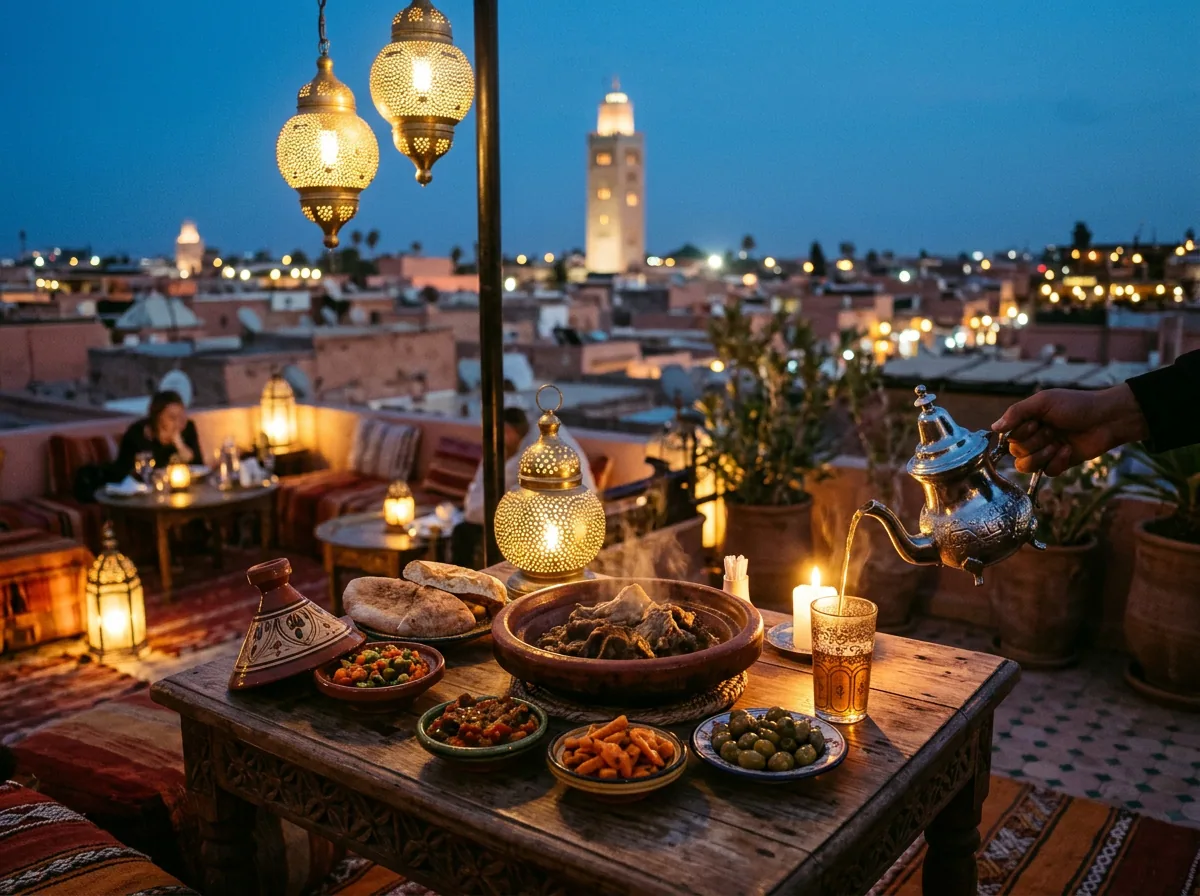
Eating well on your first evening: food tour vs rooftop dinner
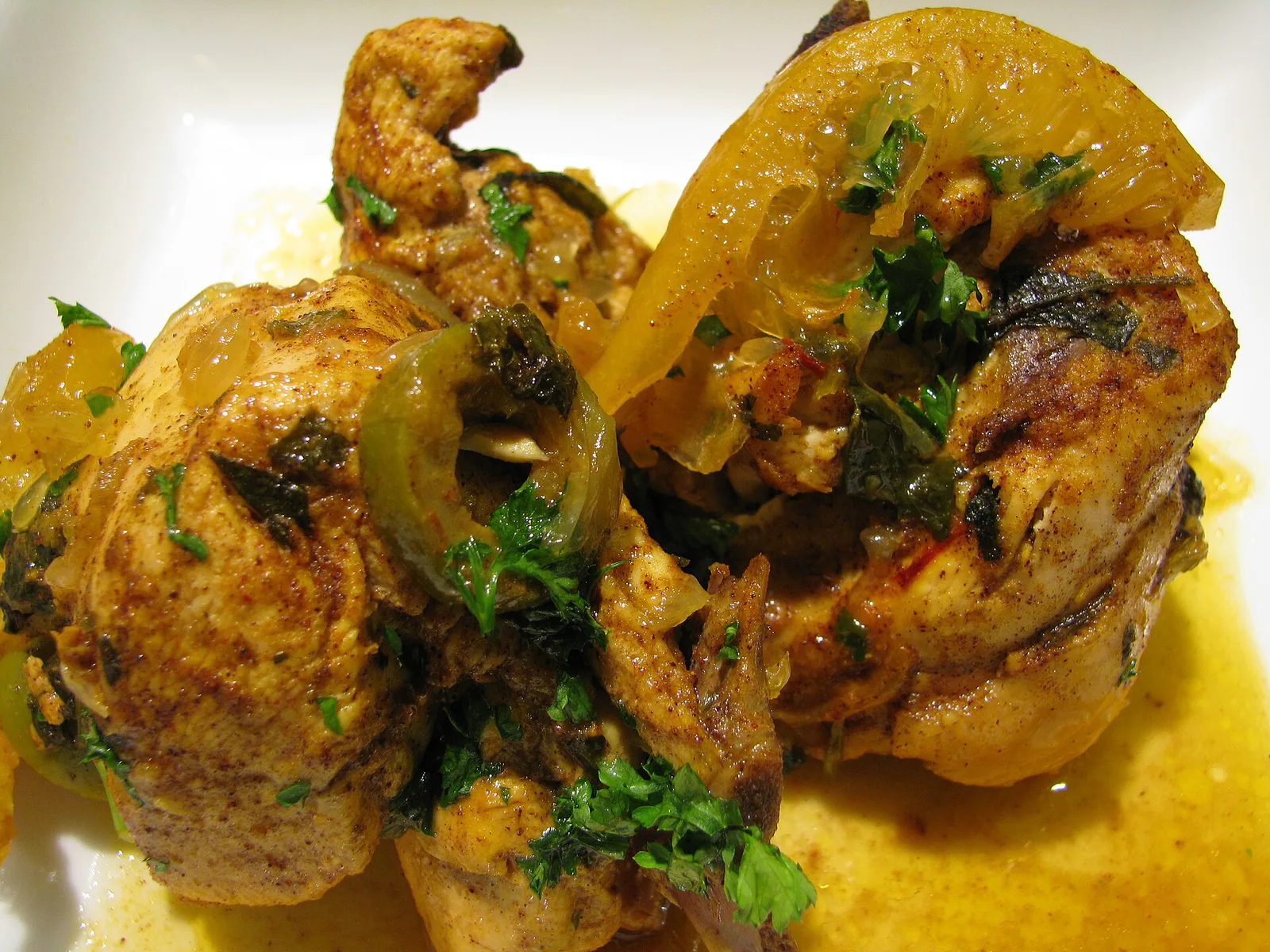
After six hours on foot, deciding where to eat without falling into a tourist-menu trap can feel daunting. Many first-timers reserve a traditional riad courtyard dinner on night one, then dive deeper into street gastronomy on night two. If you want to taste authentic local favourites immediately—slow-cooked lamb tangia baked in hammam furnace embers, crisp msemen flatbreads, spiced olives, harira soup, and sweet chebakia pastries—joining our private 3-hour Food Tour & Rooftop Dinner (€39/pp) pairs safe, vetted artisan stalls with a relaxed panoramic rooftop finale.
Smart logistics for arrival day and cash handling
Smooth logistics on arrival afternoon save hours of friction. Before you even unpack at your riad, put these practical basics in place:
- Book a fixed-rate private RAK Airport transfer (€15/vehicle for 1–4 passengers, 24/7) so a driver meets you with your name sign and coordinates your medina gate drop-off.
- Withdraw Moroccan dirhams (MAD) at bank ATMs near Jemaa el-Fna or major gates rather than exchanging large sums at airport kiosks; small 20 and 50 MAD notes are essential for cafés, water, and tips.
- Download offline maps of Marrakech before landing, but expect GPS blue dots to bounce slightly beneath covered souk roofs.
- Keep a card or screenshot with your riad’s exact name, phone number, and nearest gate (bab) for effortless returns after dinner.
- Remember Eye on Morocco’s booking terms: 100% private tours, pickup included, pay on the day with no deposit, free cancellation up to the exact day, and 24/7 WhatsApp help in five languages.
Give the medina your curiosity and an unhurried first morning, and the labyrinth quickly turns from overwhelming into deeply intoxicating—a place where every courtyard doorway holds another layer of craft and warmth.
- Private Marrakech Medina City Tour (€35/pp)
- Medina Food Tour & Rooftop Dinner (€39/pp)
- Private RAK Airport Transfer (€15/vehicle)
- Marrakech Medina destination hub
Frequently asked questions
Yes. Marrakech is welcoming and heavily patrolled by tourist police, with violent crime being extremely rare. The real challenge for first-timers is sensory fatigue—scooters weaving down narrow alleys, persistent shop greetings, and unofficial street helpers offering directions. Booking a private local guide on your first morning eliminates confusion and teaches you the medina’s rhythm for the rest of your stay.
Monument tickets are paid directly on site in Moroccan dirhams so you only pay for the landmarks you choose to enter. Typically, Bahia Palace, Ben Youssef Madrasa, and the Saadian Tombs each cost around 70–100 MAD (roughly €6.50–€9.50) per adult.
Breathable, modest layers work best year-round: loose linen trousers or below-the-knee skirts, shirts covering shoulders, and comfortable closed shoes for uneven stone cobbles. Dressing respectfully keeps attention low and protects your skin from intense midday sun.
Pre-booking a private RAK airport transfer (€15 per vehicle for 1–4 passengers, operating 24/7) avoids taxi haggling on arrival. Because cars cannot drive inside narrow medina lanes, your driver drops you at the nearest accessible gate and coordinates directly with your riad staff or porter so you reach your door smoothly.