Navigate the Marrakech souks using visible landmark anchors—Jemaa el-Fna, Souk Semmarine, Rahba Kedima (the spice square), and Ben Youssef Madrasa—rather than trusting jumping GPS dots under covered roofs. Browse calmly, compare prices across two or three stalls, and consider a private 6-hour Medina City Tour (€35/pp, hotel pickup included, pay on the day) to meet genuine workshops without sales theatre.
Every traveller who enters the Marrakech souks gets pleasantly turned around at least once. The secret is not avoiding every wrong turn—it is understanding the medieval guild logic underneath the maze so you always know how to pop back out to sunlight and mint tea.
The hidden architecture of the Marrakech souks
From above, the souks north of Jemaa el-Fna look like an improvised tangle of alleys. On the ground, they follow an orderly Islamic urban blueprint centuries old. Clean, prestigious trades—perfumes, silks, woven textiles, and books—traditionally clustered closest to the central mosques, while noisier or smokier guilds such as blacksmiths, leather dyers, and wood-turners occupied outer rings.
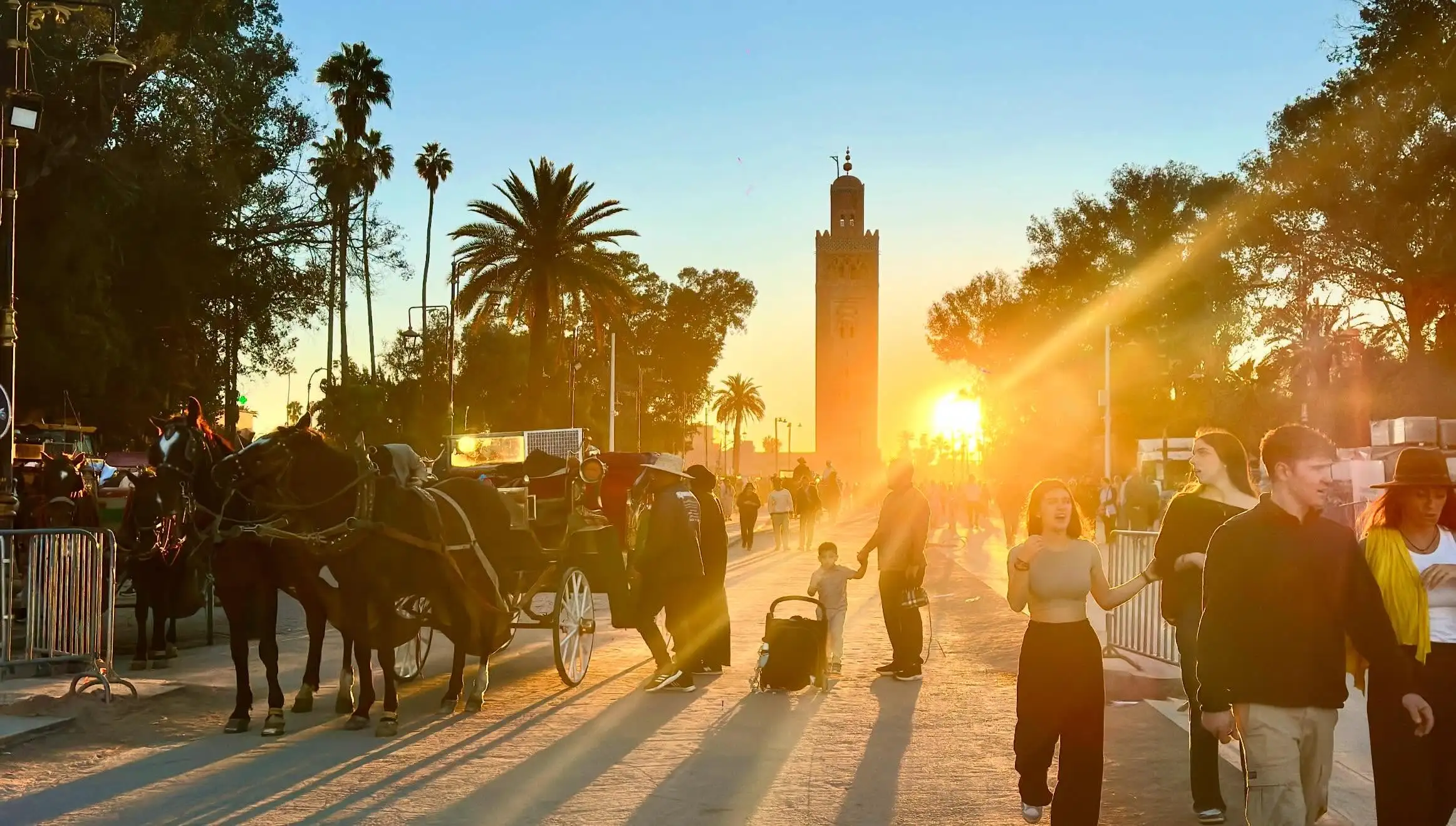
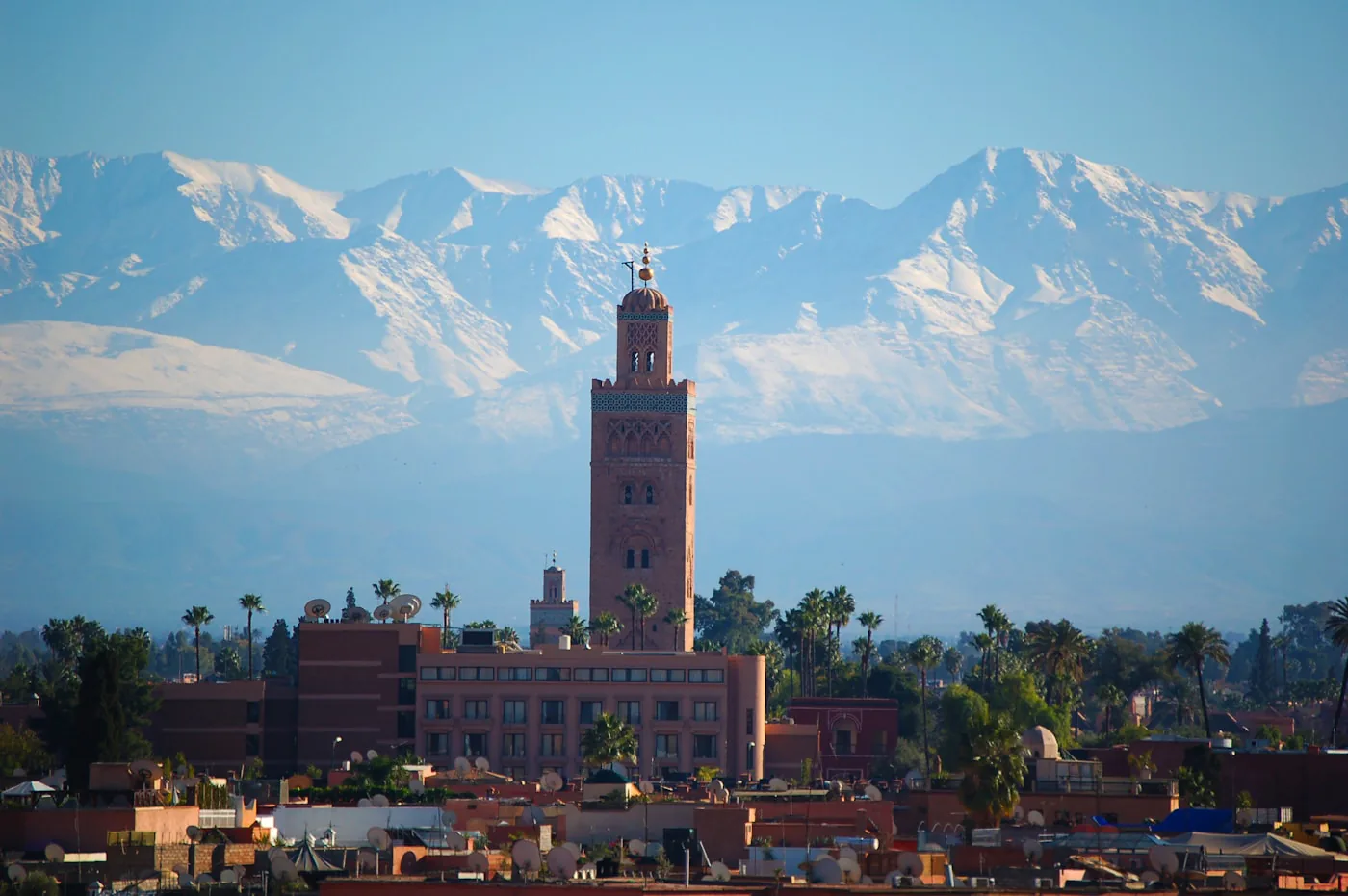
Once you grasp this simple north-south geography, stress evaporates. Jemaa el-Fna sits at the southern mouth; Ben Youssef Madrasa and the Marrakech Museum anchor the northern edge roughly fifteen minutes away on foot. Almost every main artery funnels gently between those two poles. Whenever you feel genuinely lost, simply follow the wider stream of pedestrian traffic or ask any seated merchant for “Place” (Jemaa el-Fna)—every road eventually flows south back to the square.
Landmark chaining: five anchors that beat GPS
Rather than staring down at a spinning phone arrow—which immediately flags you to unofficial street touts—navigate by chaining five unmistakable visual landmarks:
| Souk / Landmark | Primary craft or vibe | Navigation cue |
|---|---|---|
| Souk Semmarine | Lanterns, pastries, carpets & textiles | Wide covered pedestrian avenue running directly north from Jemaa el-Fna. |
| Souk El Attarine | Spices, brassware & copper lamps | Branches north-east off Semmarine; unmistakable scent of cumin, saffron, and rosewater. |
| Rahba Kedima (Spice Square) | Woven baskets, apothecaries & rooftop cafés | Open sunlit triangle ideal for resetting your bearings over fresh juice. |
| Souk Haddadine | Wrought iron & pierced metal lanterns | Follow the rhythmic clang of hammers; dramatic sparks and authentic workshops. |
| Souk Cherratine & Dyed Wool | Leather goods & hung skeins of vivid yarn | North-west alleys leading toward the Mouassine fountain and Ben Youssef area. |
How to spot genuine craft vs mass-imported souvenirs
Marrakech remains one of the Mediterranean world’s last great handmade craft hubs, yet tourist traffic has also brought factory-made imitations onto the busiest corners. Taking thirty seconds to look closely separates heirloom pieces from forgettable souvenirs.
For babouche leather slippers, flip them over: handmade pairs have stitched, slightly irregular leather soles and soft goat or calfskin uppers rather than glued synthetic rubber. For brass lanterns, lift one gently—hand-pierced brass or nickel-silver feels substantial and throws crisp geometric shadows, whereas thin tin bends under finger pressure. When looking at Berber rugs, turn back a corner to inspect the knot density on the reverse: hand-knotted wool shows slight organic variations in weave and warm lanolin sheen, never uniform machine backing.
Bargaining without tension: the rules locals respect
Many European and North American travellers dread haggling because they picture confrontation. In Morocco, negotiation is meant to be social, humorous, and completely optional. Start by visiting the Ensemble Artisanal on Avenue Mohammed V (a short walk west of the Koutoubia Mosque) for twenty minutes: it is a government-backed fixed-price showcase where you can see honest baseline prices for ceramics, leather bags, and carved wood before stepping into the souks.
Inside the alleys, follow three golden courtesies. First, only ask the price if you actually like the piece—engaging in ten minutes of back-and-forth out of curiosity wastes a shopkeeper’s afternoon. Second, decide quietly in your head what the item is worth to you before naming a number; if the gap stays wide after two friendly rounds, thank them warmly and walk away. Third, once a vendor accepts your counter-offer, honour your word and complete the purchase.
When a private guide unlocks doors you cannot find alone
Wandering solo is pure joy once you know the terrain, yet pairing one unguided afternoon with an initial private guided walk pays huge dividends. On our 6-hour private Medina City Tour (€35/pp, monument tickets paid on site), your local guide threads beyond the main retail strip into tucked-away fondouks where woodcarvers shape cedar doors, communal ovens bake trays of neighbourhood bread, and cooperative workshops explain how natural saffron, indigo, and pomegranate-rind dyes are mixed.
Equally valuable is the calm bubble a licensed local creates: unsolicited street offers disappear, you ask honest questions about daily Moroccan life, and if you do wish to shop for spices, ceramics, or a woven kilim, you understand fair quality standards upfront.
Quick souk survival checklist before heading out
Slip these practical essentials into a zipped crossbody bag and leave bulky backpacks back at your riad:
- Carry small bills (20, 50, and 100 MAD) in a separate pocket from larger notes so paying an agreed price stays quick and exact.
- Ask politely before photographing artisans at work or close-up spice pyramids—a warm “Mumkin sura?” (may I take a photo?) usually earns a grin.
- Watch out for “closed road” or “today is Berber market day” claims from strangers at quiet corners; they are almost always unofficial detours.
- Pack a foldable canvas tote inside your daypack to keep fragile ceramics or spices protected without juggling thin plastic bags.
- Combine morning souk exploration with a relaxed evening Medina Food Tour (€39/pp, 3h) or a half-day countryside Farm Cooking Class (€39/pp, 3h) to experience Marrakech’s ingredients from stall to table.
All Eye on Morocco walks and excursions are 100% private with hotel or riad pickup, pay-on-the-day settlement, free cancellation right up to the exact day, and 24/7 WhatsApp guidance in five languages whenever you want a trusted local steer.
- Private Medina & Souks City Tour (€35/pp)
- Marrakech Medina destination guide
- Medina Food Tour & Rooftop Dinner (€39/pp)
Frequently asked questions
Covered bamboo and wooden-slat roofs, high earthen walls, and tightly packed alleys bounce satellite signals, causing your blue dot to jump between parallel lanes. Offline maps are helpful for seeing general north-south direction, but chaining physical squares and cafés is far more reliable.
There is no universal fixed percentage—opening prices depend on whether you are on the busy Souk Semmarine main spine or in a quieter backstreet workshop. A polite counter-offer around 40% to 50% of the initial quote on tourist lanes usually starts a friendly conversation toward a fair middle ground. Never bargain unless you genuinely want the item.
Between 09:30 and 11:30 in the morning, shutters are open, lanes are airy, and artisans are relaxed. Between 16:30 and 19:00, golden light filters through the lattice roofs and the atmosphere buzzes. Midday (13:00–15:00) is quieter in summer heat, and many workshops pause briefly around Friday midday prayers.
No. On Eye on Morocco’s 100% private Medina City Tour (€35/pp, 6 hours), you set the balance between palaces, hidden courtyards, and craft quarters. If you want to watch metalworkers or dyers without shopping, just say so—and you pay on the day with free cancellation up to the exact day.